+Divided sleeping curtain — creates two separate compartments within one shell, useful for families wanting privacy between kids and adults.
+Double-layer construction — a separate rainfly over the inner tent adds a buffer against condensation and improves weatherproofing versus single-layer designs.
+Five large mesh windows — cross-ventilation helps reduce condensation buildup in summer while keeping insects out.
+Portable carry bag — packs down into its own bag for easier transport and storage between trips.
Common complaints
−Large pitched footprint — an 8-person layout needs a genuinely large, flat pitch, ruling out smaller or uneven campsites.
−Colour-coded pole system — setup relies on matching poles by colour, which can be fiddly for a first-time user working alone.
−No dedicated porch area — limited covered space for muddy boots or gear storage outside the sleeping compartments.
Who this is for
Families or groups of up to 8 planning multi-night stays at a fixed campsite who want built-in room separation without buying two tents. Less suited to solo backpackers or anyone prioritising a light, compact pack.
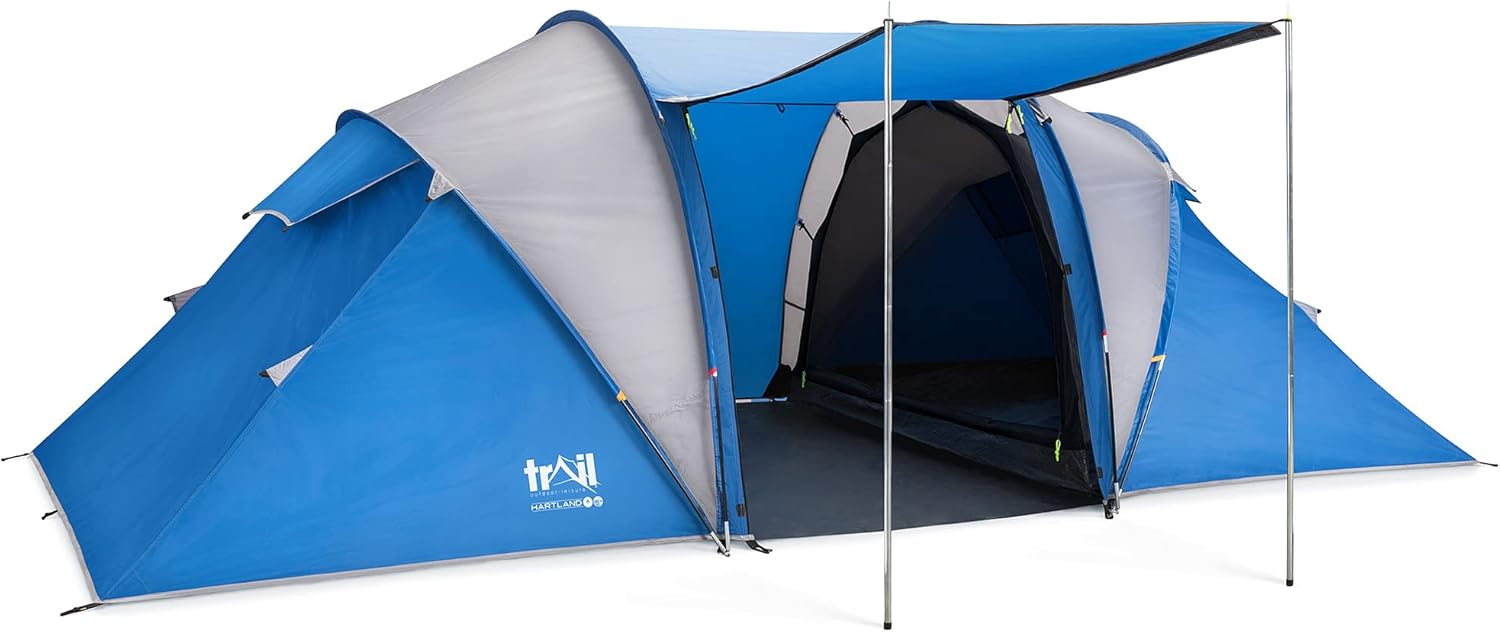
The Campros CP 8-Person tent targets exactly the audience its size suggests: families and groups who need one shelter to comfortably sleep several people through a multi-night trip. Its divided curtain design is the standout feature, letting a single tent function almost like two rooms — useful for parents wanting separation from children, or two families sharing a pitch. The double-layer build and five mesh windows work together to manage condensation, a common frustration in large single-skin tents. Setup does need patience and a generous, flat pitch, but for value-conscious group camping it remains a strong all-rounder.
2
UNP 6-Person Family Camping Tent
Families or small groups who want an easy-to-pitch tent without sacrificing interior headroom.
A close second — nearly matching buyer confidence with a slightly smaller track record.
+Double-layer waterproof design — separate flysheet and inner tent reduce condensation and add a weatherproof buffer.
+Stand-up headroom — a 2m peak height lets adults stand upright inside without stooping.
+Windproof frame — a reinforced pole structure designed to handle gustier UK camping conditions.
+Quick-pitch design — marketed for straightforward setup, useful for occasional campers who don’t want a steep learning curve.
Common complaints
−Single open layout — no internal divider, so there’s less privacy than tents with a room partition.
−Groundsheet seams need extra sealing — in heavy rain, per the product’s own care guidance.
−Snug carry bag — repacking the tent back into its original bag takes some practice.
Who this is for
Families of up to 6 who camp a few times a year and want a straightforward, stand-up-height tent without a complicated pitching process. Less ideal for anyone wanting separate sleeping compartments.
The UNP 6-Person tent is built around simplicity: a double-layer waterproof shell, a windproof frame, and a peak height generous enough to stand upright in. That combination makes it a practical choice for family car-camping trips where ease of setup matters as much as capacity. It doesn’t offer the room-divider flexibility of larger family tents, so it suits groups happy sharing one open sleeping space rather than families wanting a split layout. For weekend trips and campsite stays where quick pitching is a priority, it’s a dependable, no-fuss option.
3
Coleman 6-Person WeatherMaster Tent
Campers who prioritise weatherproofing and brand reliability over squeezing in maximum capacity.
Standout buyer sentiment, with strong approval across seasons.
+WeatherTec system — welded floors and inverted seams are designed to keep water from pooling or seeping through stitching.
+Adjustable ventilation — multiple vents allow airflow control to manage condensation across different seasons.
+Screen room porch with hinged door — gives a covered outdoor space for gear or muddy boots, and the hinged door design makes entering and exiting easier without working a zipper every time.
+Rugged pole structure — built for repeated seasonal use rather than occasional trips.
Common complaints
−Higher price point — than most tents on this list at a similar capacity.
−Heavier pack weight — better suited to car camping than carrying any distance.
−Setup takes patience — buyer feedback flags the rainfly installation and overall pitching process as fiddlier and more time-consuming than its size alone would suggest, especially without a second pair of hands.
Who this is for
Campers who camp regularly across a full season and want a tent built by an established outdoor brand with proven weatherproofing. Less suited to those on a tight budget or needing a lightweight pack-in option.
Coleman’s WeatherMaster brings the brand’s long-standing WeatherTec waterproofing system to a 6-person family tent, with welded floor seams designed to eliminate a common failure point in cheaper tents. Its screened porch and hinged door are genuine standout details, giving campers covered outdoor space and easier access without wrestling a zipper each time. Setup takes a little more patience than its size suggests, particularly around the rainfly, but it sits at a higher price than most other options here for buyers who camp often enough that repeated seasonal use is a real consideration.
4
Coleman Montana 8-Person Tent
Larger groups who want a straightforward, no-divider tunnel-style layout from an established brand.
A well-established track record among verified buyers.
+Tunnel-style design — offers a stable structure with good headroom across a long, open sleeping area.
+Weathertight construction — inherits Coleman’s welded-seam approach seen across its tent range.
+Multiple doors and windows — several entry/exit points reduce congestion for bigger groups.
+Sturdy pole system — designed to handle multi-day pitches without repeated re-tensioning.
Common complaints
−No internal room divider — the full 8-person space is one open area, offering less privacy than partitioned tents.
−Longer footprint — the tunnel shape needs a longer, flatter pitch than dome-style alternatives.
−Heavier overall pack — not designed for anything beyond car camping.
Who this is for
Larger families or groups of friends who want one big shared sleeping space rather than split rooms, and who are camping from a car rather than carrying gear on foot.
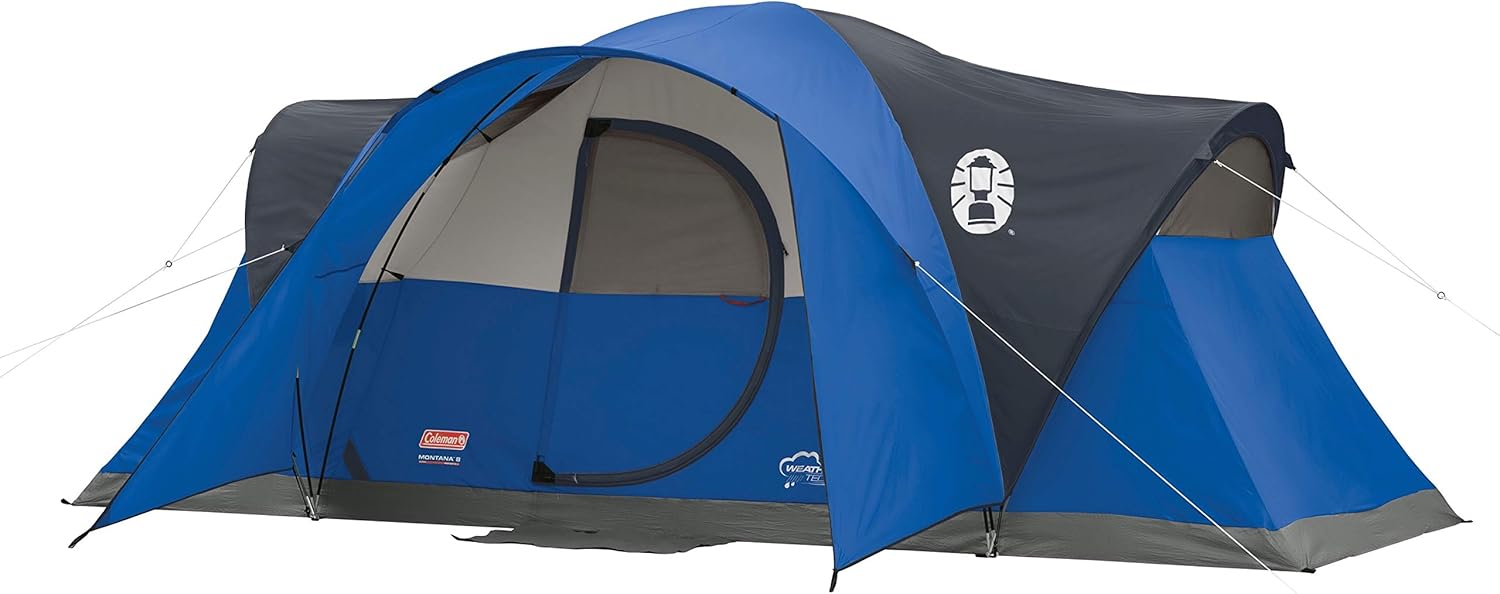
The Coleman Montana takes a tunnel-tent approach to 8-person capacity, prioritising one large, stable interior over a partitioned layout. It draws on Coleman’s familiar weatherproofing engineering, which shows up clearly in buyer sentiment around reliability in wet conditions. Its longer, tunnel-shaped footprint needs a bit more planning at the campsite than dome-style tents, and there’s no built-in divider for those wanting separate sleeping zones. For groups happy to share one open space and prioritising a trusted brand’s build quality, it’s a solid, straightforward pick.
5
Coleman Coastline Tent
Buyers who want Coleman’s build quality with some flexibility across variant sizes and configurations.
Consistent buyer approval across a solid base of verified purchases.
+WeatherTec-engineered seams — consistent with Coleman’s wider reputation for keeping water out.
+Multiple size options — the Coastline range spans different person-capacities, letting buyers match the tent to their group size.
+Practical ventilation layout — designed to reduce condensation across a range of weather.
+Practical porch area — extra covered space for chairs, gear, or muddy boots, which reviewers note is genuinely useful in wet weather rather than a token add-on.
Common complaints
−Price varies by configuration — buyers need to check carefully which specific variant they’re purchasing.
−No divided-room option — in the base configuration.
−Bulkier pack size — a car-camping tent rather than a backpacking one.
Who this is for
Buyers who want the reassurance of a well-known outdoor brand and are happy to compare sizes within the same tent family to match their group. Less suited to solo or ultralight campers.
The Coleman Coastline sits within Coleman’s broader family-tent lineup, carrying the same WeatherTec waterproofing approach found across the brand’s range. Its porch area is a genuine standout, giving extra covered space for gear or seating that not every tent on this list offers. Because it spans multiple size and price variants, it gives buyers some room to match the tent to their specific group size, though that also means checking carefully which configuration is being purchased. For buyers who want that extra covered space alongside brand consistency, it’s a dependable choice.
6
Forceatt 2-3 Man Backpacking Tent
Hikers and backpackers who need a genuinely lightweight, packable tent for multi-day trail use.
Smaller pool of verified buyers, but standout buyer approval.
+PU3000mm waterproof rating — a hydrostatic head figure aimed specifically at genuine trail conditions, not just light rain.
+Lightweight, portable build — designed to be carried in a backpack rather than driven to a pitch.
+Fast setup — geared toward hikers who need to pitch camp quickly at the end of a long day.
+Exceptional value for money — buyers consistently rate its performance and build quality above what its price would suggest, some comparing it favourably to considerably more expensive tents.
Common complaints
−Limited interior space — a 2-3 person rating here means tighter capacity than family-oriented tents on this list.
−No internal room division — a single open sleeping area, as expected at this size.
−Fewer storage pockets — than some dedicated backpacking-specific tents.
Who this is for
Solo hikers or pairs planning multi-day backpacking trips who need a genuinely lightweight, quick-to-pitch shelter rather than a car-camping tent. Less suited to families needing more interior space.
Forceatt’s 2-3 man tent is built with trail use specifically in mind, from its PU3000mm waterproof rating to its lightweight, packable design. It stands apart from most other entries on this list, which lean toward car camping — this one is genuinely built to be carried. Its price-to-performance ratio stands out too, with buyers regularly rating it above tents costing considerably more. For backpackers who want genuine trail capability without a premium price tag, it’s a clear standout.
7
UNP 10-Person Family Tent with Divider
Large families or groups of up to 10 who want a genuine two-room layout with a divider.
Steady buyer confidence for a two-room family design.
+Two-room design with divider — creates real separation between sleeping zones, useful for larger families or mixed groups.
+Generous interior dimensions — fits multiple sleeping bags or several air mattresses across its 10-person rated space.
+Multiple entry points — separate room access reduces the need to walk through one space to reach another.
+Family- and festival-friendly design — suited to extended stays where space matters more than portability.
Common complaints
−Large footprint — needs a genuinely spacious, flat pitch, which can limit campsite choice.
−Heavier and bulkier to transport — than smaller tents on this list.
−Longer setup time — given its size and two-room structure.
Who this is for
Large families, multi-family groups, or festival-goers who need real room separation and don’t mind a bigger, heavier tent in exchange for the extra space.
The UNP 10-Person tent solves a specific problem: it gives large groups a genuinely divided two-room layout rather than one open shared space. Interior dimensions are generous enough for multiple sleeping bags or air mattresses across both rooms, with separate access points reducing the need to cross through someone else’s sleeping area. The trade-off is size — this is a tent built for a fixed pitch over several days, not for carrying any distance. For big families or festival groups prioritising space and privacy, it’s one of the more practical layouts on this list.
8
UNP 2-3 Person Dome Tent
Budget-conscious campers who want a genuinely waterproof small tent without a big outlay.
One of the larger verified-buyer bases in the budget tier.
+Waterproof and windproof construction — at an entry-level price point.
+Easy-assemble dome design — straightforward for first-time campers to pitch without much practice.
+Sturdier build than its price suggests — buyers consistently describe it as well made and able to hold up to regular use, ahead of what its price point implies.
+Exceptional value for money — widely seen as a strong budget pick, with quality and usefulness that punches above its price.
Common complaints
−Capacity rating runs optimistic — buyer feedback suggests it fits fewer people comfortably than its stated rating implies, more realistic for one adult with gear than two.
−Single-layer sections — in parts of the design offer less condensation buffering than fully double-layer tents.
−Fewer premium features — no porch or divider, compared with pricier options here.
Who this is for
Couples, small families, or first-time campers who want a reliable, easy-to-pitch tent for occasional trips without spending on premium features they may not need.
The UNP 2-3 Person tent is the most accessible entry point on this list by price, without compromising much on the basics: waterproof and windproof construction, and a dome design simple enough for a first-time camper to pitch alone. Buyers consistently rate its build quality above what its price suggests, and many see it as excellent value overall. Its stated capacity runs a little optimistic in practice, so shoppers planning for two adults with gear may want to size up. For weekend trips, festivals, or as a starter tent, it still covers the essentials reliably.
9
Forceatt 2-4 Man Dome Tent
Small groups who want a dual-door tent versatile enough for hiking, beach days, or short camping trips.
A growing track record with dependable buyer sentiment.
+Two-door layout — reduces the need to climb over other occupants to get in or out.
+PU3000mm waterproof rating — the same trail-focused waterproofing spec as Forceatt’s smaller backpacking tent.
+Lightweight, windproof build — suited to a range of outdoor settings beyond just campsites.
+Roomy for its size — buyers consistently find the interior more generous than the footprint suggests, particularly for one or two people with gear.
Common complaints
−Snug for four adults — the 2-4 person capacity is more comfortable for two with gear.
−No internal room divider — so it’s one shared sleeping space.
−Limited storage or porch area — compared with larger family tents on this list.
Who this is for
Small groups or couples who want one tent flexible enough for hiking trips, beach stays, and casual weekend camping, rather than a single dedicated use case.
Forceatt’s 2-4 man tent shares the same PU3000mm waterproof rating as its smaller sibling on this list, but scales up slightly for small groups rather than solo hikers. Its two-door design is a practical touch, letting occupants come and go without disturbing each other, and buyers consistently find the interior more generous than its footprint suggests. It’s positioned as a genuinely multi-purpose tent — suited to hiking trips, beach stays, and casual camping alike — rather than one built exclusively for backpacking or car camping. For buyers who want that flexibility in one shell, it’s a sensible middle-ground option.
10
Night Cat 1-2 Person Backpacking Tent
Solo hikers or minimalist campers who want the lightest, most compact tent on this list.
Solid buyer confidence for a compact backpacking design.
+Genuinely lightweight build — designed specifically for 1-2 person backpacking rather than car camping.
+Single-layer, quick-pitch design — set-up focuses on speed and simplicity over extra features.
+Compact packed size — easy to fit into a hiking pack alongside other gear.
+Budget-friendly for a dedicated backpacking tent — one of the more affordable options built specifically for solo trail use.
Common complaints
−Single-layer construction — offers less condensation buffering than double-layer tents on this list.
−Very limited interior space — built for one person comfortably, tight for two with gear.
−Fewer ventilation points — than larger tents, which can matter in warmer conditions.
Who this is for
Solo hikers or ultralight backpackers who need the smallest, lightest possible shelter and are comfortable trading some interior space and features for pack weight.
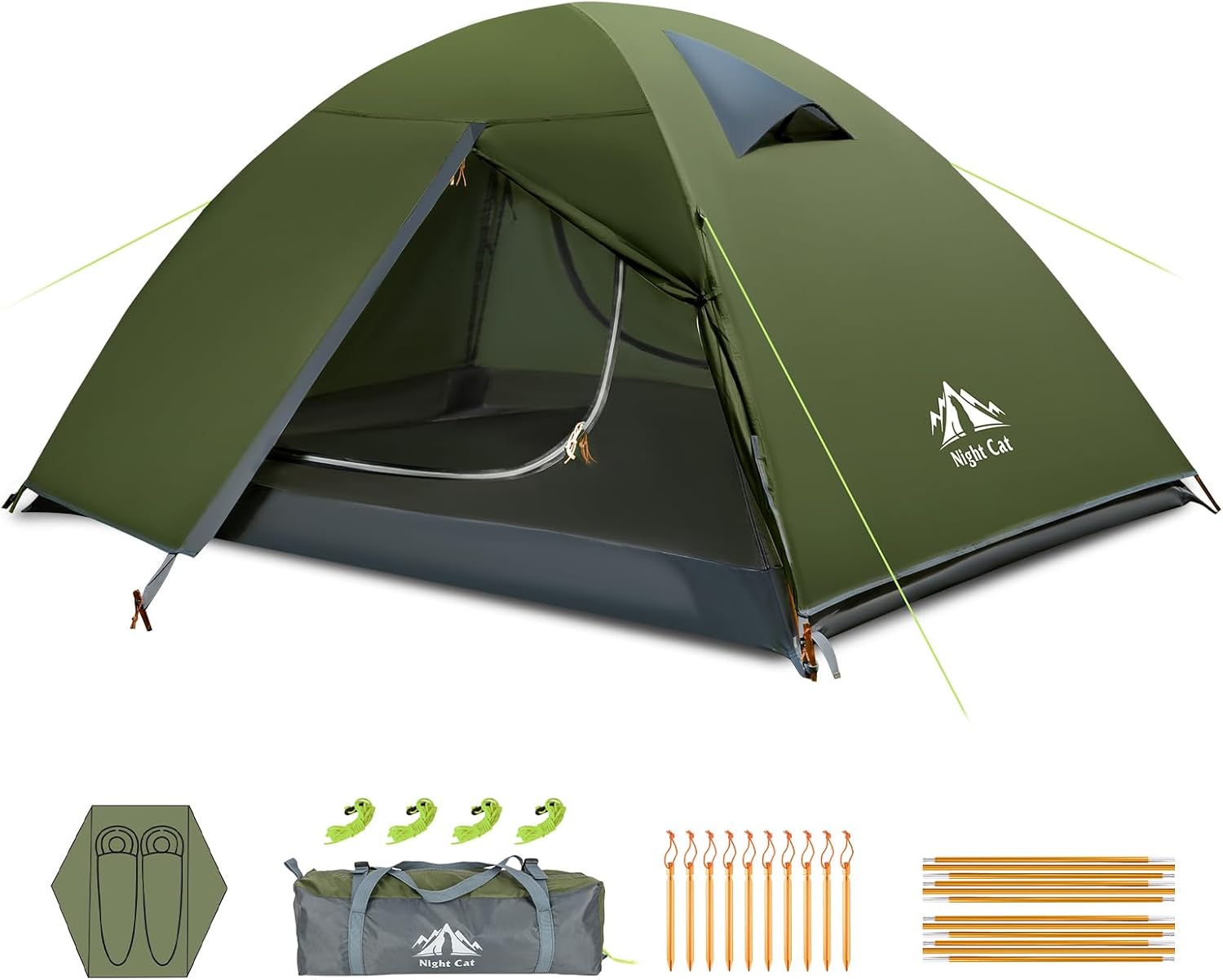
The Night Cat 1-2 Person tent is built for one specific use case: solo or minimalist backpacking where pack weight matters more than interior comfort. Its single-layer, quick-pitch design keeps things simple, and its compact packed size makes it an easy addition to a hiking pack. It won’t offer the condensation management or interior space of the double-layer, family-oriented tents elsewhere on this list, but for hikers whose priority is minimising weight and setup time on the trail, it fills that gap well.
Share this ranking
Best Camping Tents UK 2026 — Common Questions
What does a tent’s person-capacity rating actually mean?
Person-capacity ratings describe how many people can fit sleeping bags side by side with no extra room for gear or movement. For genuine comfort, many campers plan for one size category down from the stated capacity — a “4-person” tent, for example, is often more realistic for two adults with kit.
How waterproof does a tent need to be for UK camping?
UK weather makes waterproofing important year-round. Look for a hydrostatic head rating of at least 1,500mm for light rain, and 3,000mm or higher for genuinely wet, exposed conditions. Sealed or taped seams and a bathtub-style groundsheet also make a meaningful difference beyond the fabric rating alone. Real-world performance still varies between individual units even at the same rating, so re-sealing seams before a big trip and pitching the rainfly drum-tight are both worth doing as standard practice.
What’s the difference between a single-layer and double-layer tent?
A double-layer tent has a separate outer flysheet and inner tent body, creating an air gap that reduces condensation and improves insulation. A single-layer tent combines both into one shell, which is lighter and packs smaller but tends to trap more moisture inside overnight. Pole material and frame quality vary widely across models at every price point too, so handling poles gently during setup and avoiding over-tensioning guy lines helps avoid the most common failure points.
Do I need a footprint or groundsheet protector for my tent?
A footprint isn’t essential, but it protects the tent’s groundsheet from sharp stones, roots, and abrasion, extending its lifespan, and adds a slight barrier against ground moisture. For occasional use it’s optional; for frequent camping on varied terrain, it’s a worthwhile add-on.
New rankings, straight to your inbox.
Every new ranking we publish — delivered once a week. No noise, no promotions. Just the lists.